
Reading path: Octopuses, jellies and other invertebrates →
A closer look at the evidence
| Question or feature | Explanation | What it does not establish |
|---|---|---|
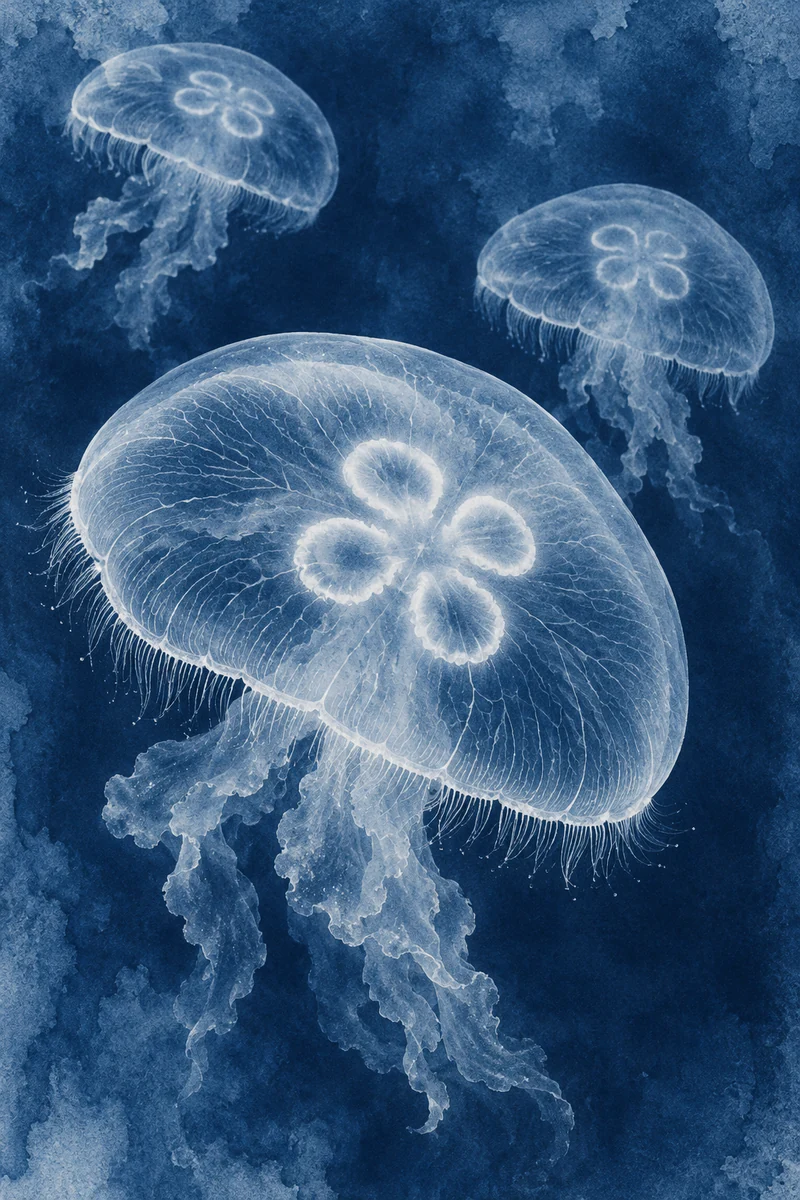
| Medusa | Free-swimming bell stage; translucent, with short marginal tentacles, and feeds on zooplankton. [1] [2] | Appearance does not establish a particular Aurelia species. [1] |
| Polyp | Attached stage that can bud additional polyps and undergo strobilation. [1] | A count of visible medusae does not count attached polyps. [2] |
| Ephyra | Young free-swimming stage produced through strobilation; it grows into a medusa. [1] [2] | The cycle description does not establish a universal seasonal schedule. [2] |
The bell is a stage, not the whole animal story
Moon jellies belong to the genus Aurelia, which includes multiple species. When people recognize a translucent bell edged with short tentacles, they are usually looking at the free-swimming medusa stage. That shape is useful for recognizing a moon jelly, but it does not by itself identify the species. [1] [2]
The medusa feeds on zooplankton and reproduces sexually. Fertilized eggs develop into larvae, beginning a sequence that changes both the animal’s form and where it lives. A count of visible bells therefore records only one part of the life cycle. [1] [2]
From swimming larva to attached polyp
After development, larvae settle and become attached polyps. The shift matters: a polyp is fixed in place, unlike the familiar drifting medusa. An observer looking only through open water could miss this stage entirely, even where polyps later supply new swimming jellies. [2]
Polyps can reproduce asexually by budding, making additional polyps. They can also undergo strobilation, a process that produces young free-swimming jellies called ephyrae. The ephyrae grow into medusae, which can then reproduce sexually and start the sequence again. [1] [2]
Two routes to more jellies
The cycle combines sexual reproduction in the medusa stage with asexual multiplication in the attached polyp stage. In the sexual route, medusae produce gametes; fertilized eggs develop into larvae that settle. In the asexual route, a polyp buds additional polyps and produces multiple ephyrae through strobilation. [1] [2]
Consider a clearly hypothetical monitoring note: a rocky surface has one polyp, and later several ephyrae appear from it. That would illustrate one polyp producing multiple young jellies; it would not mean the polyp simply enlarged into one bell. A separate count of medusae would answer a different question. [2]
How to read a moon-jelly count
A useful observation records which stage was counted: medusae in the water, larvae, or attached polyps. It should also state whether the animals were wild or cultured. Without those details, a change in bell numbers cannot show whether the polyp population changed, whether ephyrae were produced, or whether the observations cover the same stages. [1] [2]
The cycle explains why the familiar bell is only a partial view. It does not provide a universal calendar for when spawning or strobilation occurs. The seasonal example associated with a life-cycle diagram is not a schedule for every region or cultured population. [2]
Appearance is not a handling test
The translucent bell and short marginal tentacles help describe the medusa, but appearance alone cannot establish species identity or whether contact is safe. The genus contains multiple species, and a life-cycle account does not establish an absence of stinging cells. Do not infer that a jelly is safe to touch from its familiar shape. [1]
The practical identification is modest: describe the visible bell and tentacles, call it Aurelia when the species is unverified, and distinguish a medusa sighting from evidence of attached polyps or ephyrae. That preserves what was actually observed while keeping the unseen stages in view. [1] [2]
Sources & further reading
Have a correction or a source to suggest? Send a note →