
Reading path: Types of whales →
A closer look at the evidence
| Question or feature | Explanation | What it does not establish |
|---|---|---|
| Photo-identification | Fluke shape, underside pigmentation, and scars can distinguish individuals in repeated photographs. [1] | The markings must be sufficiently visible and comparable; a photograph does not record underwater song. [1] |
| Bubble feeding | Bubble curtains can concentrate prey before an engulfing lunge; solitary manufacture has also been documented. [1] [3] | This feeding tactic varies and is not used in every context. [1] [3] |
| Hawaiian song monitoring | Hydrophones record a strong December–April chorus and can detect singers underwater. [2] | Sound detection does not provide a decoded translation or a simple whale count. [2] |
| Migration | Many populations connect higher-latitude feeding areas with warmer breeding areas; Alaska–Hawaii is one connection. [1] | Routes and legal status differ among population segments. [1] |
The whale beneath the fluke photograph
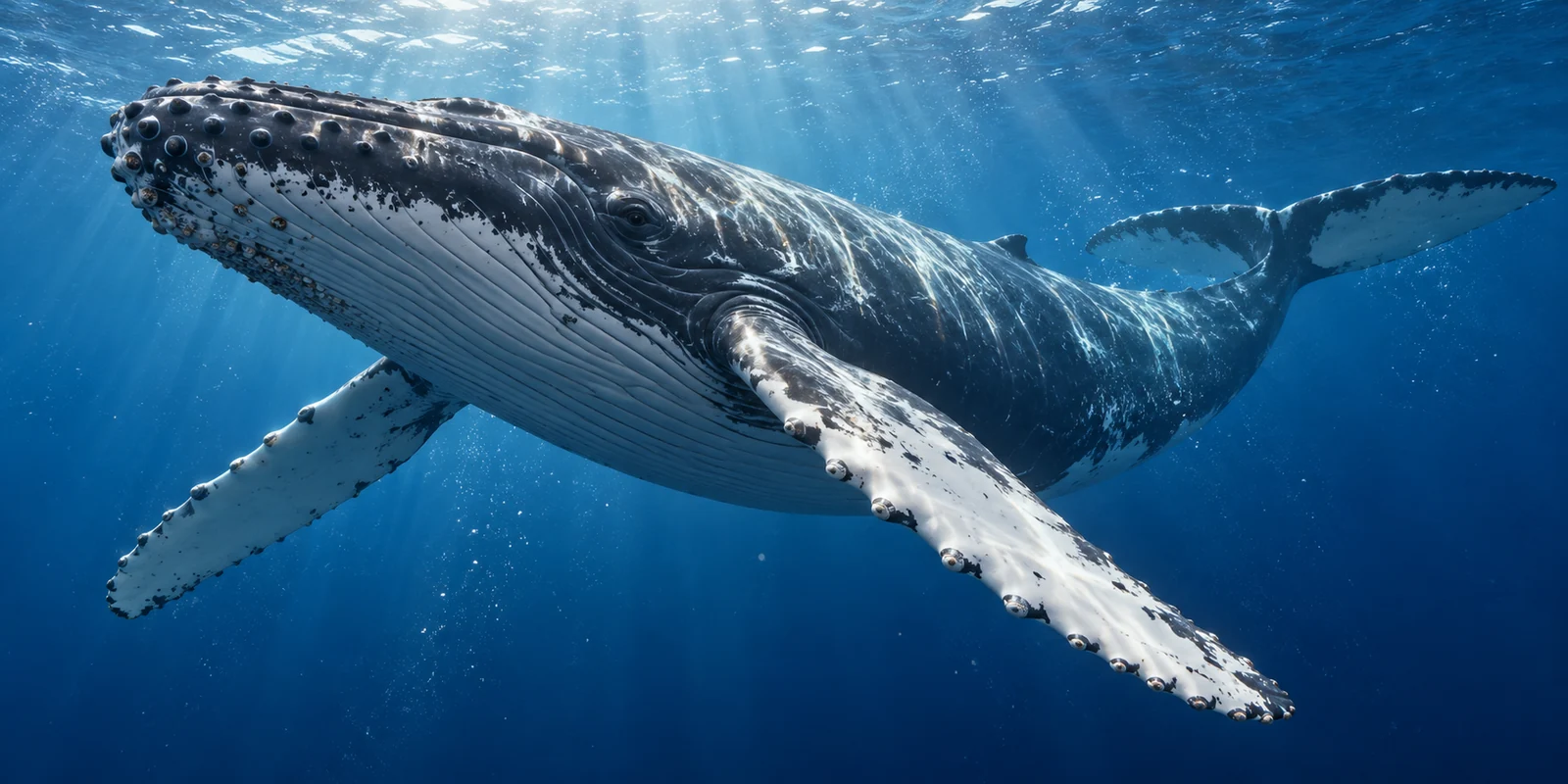
The humpback whale, Megaptera novaeangliae, is recognizable by its long pectoral fins and the pale markings on the underside of its flukes. Pigmentation, fluke shape, and scars vary among individuals, allowing researchers to compare photographs and identify particular whales. A fluke image can therefore be evidence about individual identity when the markings are visible and comparable. [1]
This visual method answers a different question from listening. A photograph can support recognition of a whale; it cannot by itself record what the animal vocalized while underwater. Conversely, a sound recording establishes acoustic presence but does not identify a particular whale unless additional evidence connects the sound to an individual. [1] [2]
Bubble curtains and the engulfing lunge
Humpbacks filter krill and small schooling fishes through baleen. Some feeding whales release curtains of bubbles that concentrate prey before an engulfing lunge. The whale’s tactic is to make prey more accessible in a bounded area, then take in a large mouthful of prey-bearing water and filter the food. [1]
Bubble feeding can involve coordinated animals, but a group is not required for a bubble net. A 2024 study used aerial observations and animal-borne measurements to investigate solitary whales’ bubble-net structure and foraging effort. Together, those methods provide different evidence: aerial views can show the bubble pattern, while instruments carried by a whale can record its movements and effort. [1] [3]
The tactic varies with population and context, and bubble nets are not the only way humpbacks feed. It would be an overreach to infer that every humpback uses this method, or that a visible bubble spiral alone reveals the precise prey intake. [1] [3]
Songs recorded over a breeding season
Male song is especially prominent in Hawaii during the winter breeding season. Acoustic monitoring by the Hawaiian Islands Humpback Whale National Marine Sanctuary records a strong chorus from December through April. Listening stations complement visual surveys because they can detect singers while whales are underwater. [2]
A practical evidence-reading exercise is to compare what two instruments establish. A fluke photograph may identify an individual; a hydrophone record can show that humpback sounds were detected over time. The recording does not translate the song into a decoded message, and the chorus is not a simple count of whales: one recording establishes sound, not a one-to-one tally of animals. [1] [2]
Migration is population-specific
Many humpback populations move between productive higher-latitude feeding areas and warmer breeding or calving areas. The Alaska–Hawaii connection is one North Pacific migration pattern, not a route followed by every humpback population. [1]
Location and timing may fit a known migration connection, but season alone cannot assign every individual to that route. North Pacific humpbacks use several breeding and feeding connections, and population segments differ in their legal status. A sighting off one coast therefore needs additional context before it can establish the animal’s full migration history or population membership. [1]
Three methods, three kinds of evidence
Photographs, hydrophones, and animal-borne measurements resolve different parts of humpback behavior. Photographs can compare individual fluke patterns; hydrophones document sound when whales are submerged; aerial views and tags help investigate how a whale constructs a bubble net and forages. [1] [2] [3]
These records work best in combination, but they do not erase their limits. A song recording is not a decoded conversation or a head count. A feeding tactic observed in some whales is not universal. And a migration connection documented for one population cannot stand in for every population’s movement. [1] [2] [3]
Sources & further reading
Have a correction or a source to suggest? Send a note →