
Reading path: Marine organisms and body plans →
A new science guide at a historical Coldwater address. About the earlier site →
What to look for
| Feature | Observation | Comparison or limit |
|---|---|---|
| Swimming | Wing-like lobes of the foot propel pelagic snails. | These structures are not fish fins. |
| Adult covering | Clione sea angels are shell-less as adults; Limacina bears a shell. | Shell-dissolution evidence does not transfer directly to a shell-less adult. |
| Identification | Record body covering, outline and movement. | A single photograph may conceal diagnostic anatomy. |
Snails built for open water
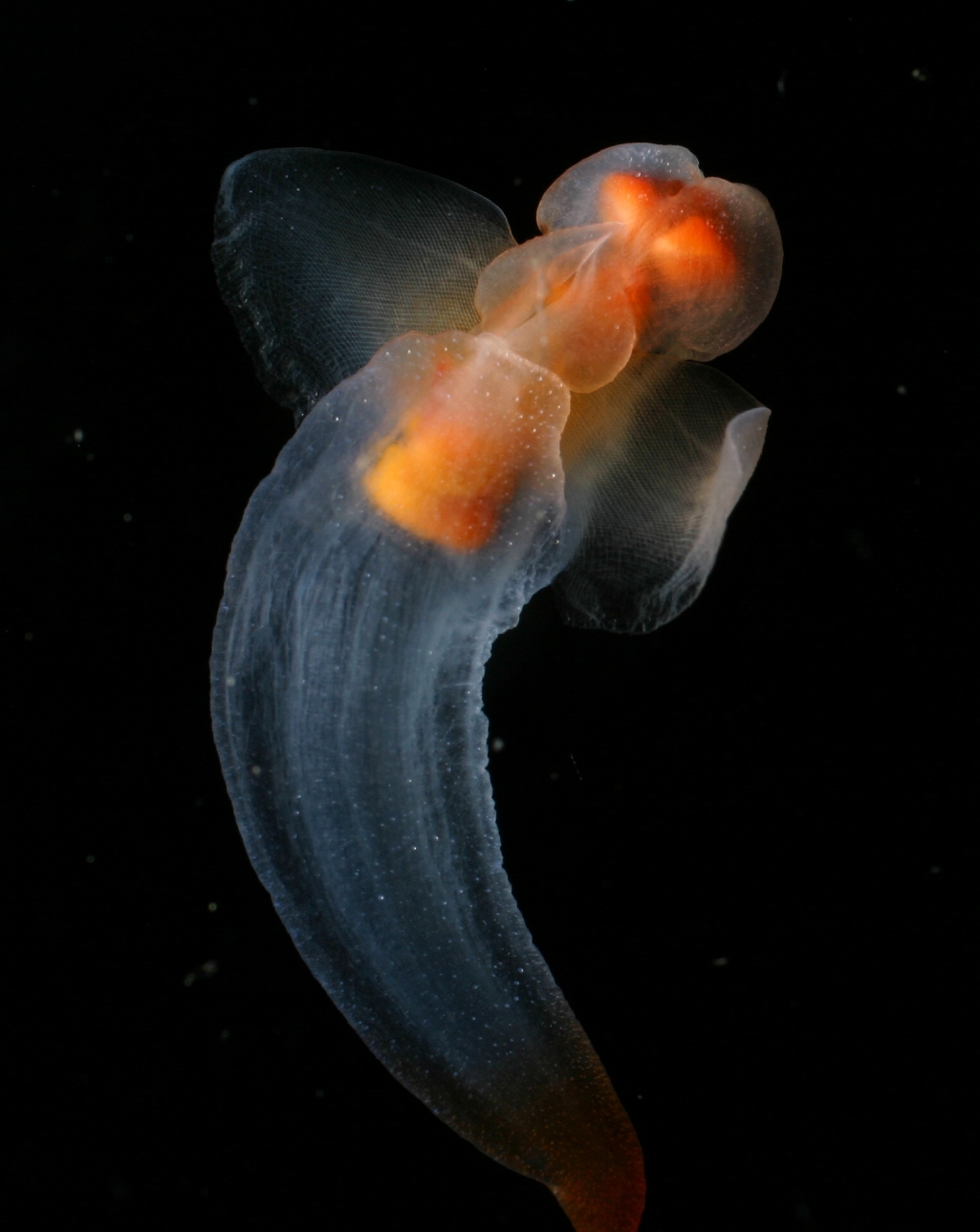
Pteropods are gastropod mollusks that live in the water column rather than crawling across the seafloor. Their foot is modified into paired winglike lobes that beat through the water. Those motions can look like flapping, but the “wings” are part of a snail’s body plan, not fins like those of a fish. [1]
A hypothetical underwater video might show a small animal hovering, then advancing with repeated strokes of two broad lobes. That observation supports swimming by a modified foot. It does not, by itself, identify the animal: body shape and other structures are needed to tell different pteropods apart.
Two names, two adult forms
Many sea butterflies, including Limacina, bear a shell as adults. Sea angels are gymnosomes; adult Clione, for example, is shell-less. The shared swimming lifestyle can make the groups seem similar, but their adult coverings differ. “Sea angel” and “sea butterfly” are common names for distinct forms within the larger pteropod group. [2]
This distinction matters when discussing shell damage. A shell-dissolution observation applies to an animal with a shell; it should not be transferred automatically to a shell-less adult sea angel. That does not establish that shell-less animals are unaffected by changing chemistry, only that shell erosion is not the relevant direct observation for a shell they do not have.
Why carbonate chemistry matters
Ocean acidification describes a change in seawater chemistry as absorbed carbon dioxide contributes to more hydrogen ions and lower pH. The water remains alkaline on average, but the shift reduces the availability of carbonate ions that shell-building organisms use to form calcium carbonate. Under sufficiently corrosive conditions, calcium carbonate structures can dissolve. [1]
The outcome depends on the water’s chemistry and the animal’s biology. For a shelled sea butterfly, shell transparency or visible surface condition could provide biological information alongside a chemical measurement. But a shell image alone does not reveal the water’s pH, the animal’s exposure history, or the cause of any damage.
Season and species shape response
A 2024 study examined the shelled sea butterfly Limacina retroversa from the Gulf of Maine in five carbon dioxide exposure experiments across four seasons, each lasting up to 15 days. The researchers reported relationships among carbonate saturation, shell transparency, and exposure duration, and found seasonal variation in responses. Those results apply to this species and study design; they are not a universal forecast for all pteropods. [2]
That seasonal variation offers a useful example of why biology can complicate a simple chemistry-to-impact prediction. Two groups exposed to similar conditions may differ if their physiological state or season differs. The study supports investigating biological indicators alongside seawater measurements, while leaving open how well the same indicators work for other species, places, or exposure periods.
Sources & further reading
Have a correction or a source to suggest? Send a note →