
Reading path: Rays and reef fish →
A closer look at the evidence
| Question or feature | Explanation | What it does not establish |
|---|---|---|
| Clavus | A blunt rear structure formed from dorsal and anal fin elements replaces the ordinary caudal fin. [2] | A partial surface view may hide the clavus and cannot establish species identity. [1] |
| Propulsion | Powerful dorsal and anal fins help move the relatively rigid body. [2] | The clavus is distinct from the tall dorsal and anal fins used for propulsion. [2] |
| Mola mola identification | Mola mola has a wavy clavus margin; additional anatomical characters distinguish it from related sunfishes. [1] | Size alone and a dorsal fin at the surface are insufficient; similar Molidae species exist. [1] |
| Diet and water use | Recorded prey include gelatinous animals, other invertebrates and fishes; sunfish use surface and deeper waters. [2] [1] | A surface sighting captures one moment in a diving animal’s routine; its diet also extends beyond jellyfish. [2] |
The rear edge is the key clue
Ocean sunfishes belong to the family Molidae, but “ocean sunfish” can refer imprecisely to more than one species. Mola mola is distinct from the bump-head sunfish, Mola alexandrini, and the hoodwinker sunfish, Mola tecta. Size or a dramatic silhouette is not enough to settle which one is present. [1]
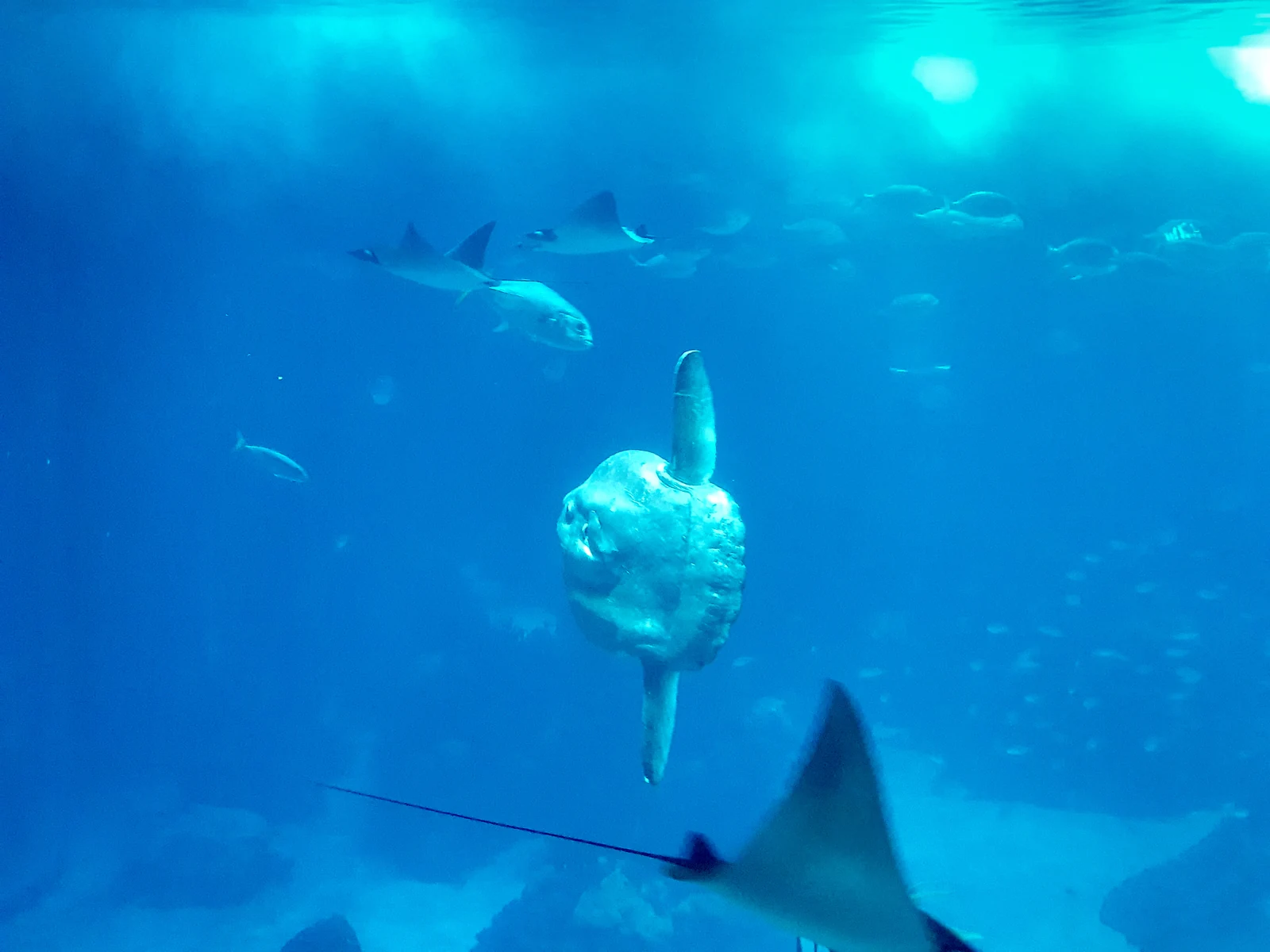
Instead of an ordinary caudal fin, a sunfish has a blunt rear structure called a clavus. The clavus is formed from elements derived from the dorsal and anal fins. It creates the truncated outline that makes a sunfish look as if its back end has been cut short, but it is not simply a normal tail fin in a different shape. [2]
A useful identification photograph should show the fish’s side, head profile, body outline and complete rear margin. In a hypothetical image, a rounded body and tall fin at the surface might support “sunfish,” but a view that cuts off the clavus cannot support a confident species identification. Preserve uncertainty as Mola sp. when diagnostic features are missing. [1]
How a rigid body moves
The body is relatively rigid, and tall, powerful dorsal and anal fins help propel the fish through water. Those prominent fins, rather than a conventional tail sweeping side to side, provide the visible strokes that observers often notice. The clavus forms the rear edge, while the dorsal and anal fins supply the principal propulsive action described in the source. [2]
Mola mola lacks pelvic fins and a swim bladder. Its relatively rigid body contrasts with the flexible trunk and sweeping tail motion of many familiar fishes. The tall dorsal and anal fins are therefore important features to observe when the animal swims; the blunt clavus at the rear is a separate structure. [2]
A dorsal fin breaking the surface can be mistaken for a shark. It is a clue to an animal moving near the surface, not an identification by itself. A second view revealing a rounded body and blunt clavus can change the interpretation; the rear margin and other anatomical characters are needed to distinguish sunfish species. [1]
Species-level details matter
For Mola mola, a wavy clavus margin and other anatomical characters help separate it from similar species. The relatively small mouth contains fused tooth plates. These details are more useful for careful identification than simply calling the animal “giant” or assigning a species from body size. [1]
A record weight requires a verified species identification as well as a measurement. Mola mola, M. alexandrini and M. tecta are distinct species, so a number attached only to the loose label “ocean sunfish” may conceal an important taxonomic difference. Check the original record and diagnostic anatomy before attaching its measurement to a species. [1]
For an identification record, list the characters actually visible: the head profile, complete rear margin and other diagnostic anatomy, or only a partial silhouette. Reported size alone is insufficient. A complete lateral image showing the clavus gives an identifier more useful evidence than a close crop of one fin breaking the surface. [1]
Food and where sightings fit
Ocean sunfish prey include gelatinous animals, but “eats jellyfish” is incomplete. Other gelatinous prey, as well as non-gelatinous invertebrates and fishes, are also recorded. The available description supports a diverse diet rather than an exclusive dependence on jellyfish. [2]
Sunfish use both surface waters and deeper parts of the ocean. A surface sighting records the animal’s position at that moment rather than its whole diving routine. A photograph of a sunfish near the surface cannot show the depths it visited earlier or establish the purpose of that particular surfacing event. [1] [2]
For a hypothetical sighting report, record the view and uncertainty separately: “rounded fish with tall dorsal fin; clavus not visible” supports a cautious sunfish observation, while “Mola mola” requires more diagnostic anatomy. This keeps the observation useful without making a species claim the evidence cannot resolve.
Sources & further reading
Have a correction or a source to suggest? Send a note →